DSCR Cash-Out Refinance: BRRRR and LLC Guide for Investors
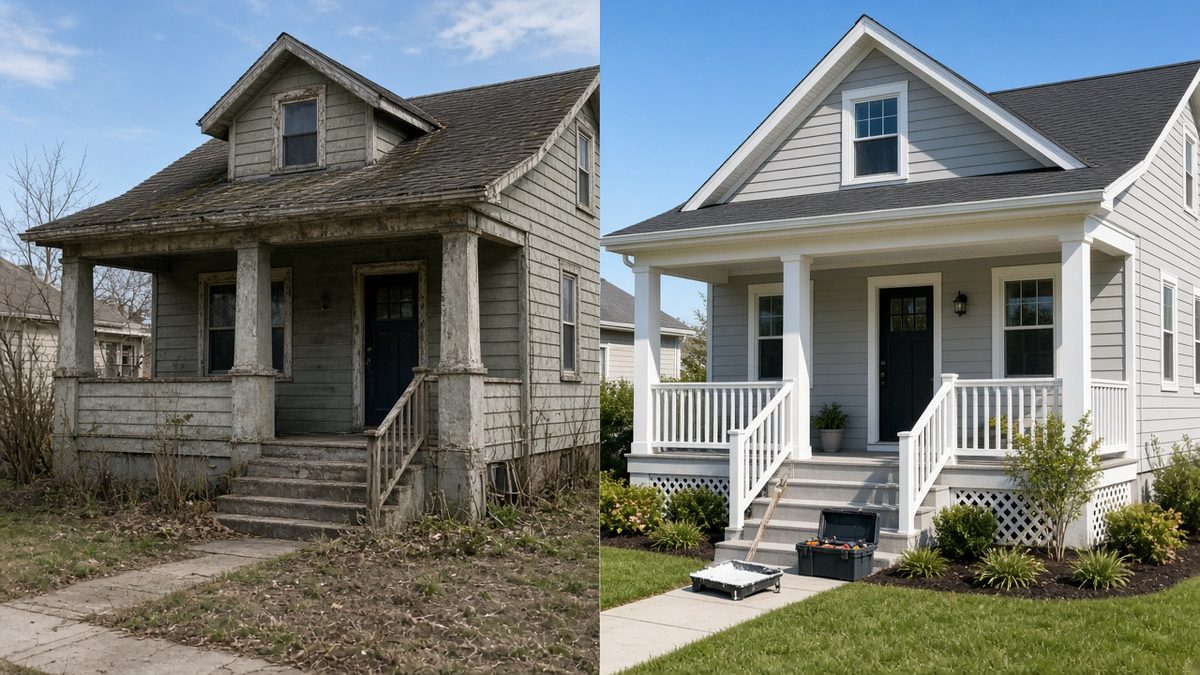
A DSCR cash-out refinance replaces the loan on a rental property with a larger one and gives you the difference in cash. It qualifies mainly on the property’s rent compared with the new payment, not your personal income. That’s why it’s a popular “refinance” step in the BRRRR strategy: Buy, Rehab, Rent, Refinance, Repeat.
Key Takeaways
- Cash-out = new loan − old loan payoff − closing costs.
- DSCR lenders often cap cash-out around 70% to 75% loan-to-value. It varies by lender.
- Seasoning rules decide whether the lender uses the new appraised value or your cost.
- Many DSCR programs let you close in an LLC, usually with a personal guarantee.
- The new loan still needs a solid DSCR, so check the rent against the new payment.
How Does a DSCR Cash-Out Refinance Work?
- You apply with the property’s lease or expected rent.
- An appraiser sets the current value and market rent.
- The lender sets a max loan based on loan-to-value (LTV) and the DSCR on the new payment.
- The new loan pays off the old one. You keep what’s left after closing costs.
LTV means loan amount ÷ property value. A 75% LTV on a $300,000 home is a $225,000 loan.
What Is the BRRRR Strategy?
BRRRR stands for:
- Buy a property below its potential value, often with cash or a short-term loan
- Rehab it to add value
- Rent it to a qualified tenant
- Refinance into long-term financing, often a DSCR loan, to pull cash back out
- Repeat with the next property
The refinance step is where a DSCR loan shines. You don’t have to prove more personal income every time you add a door.
BRRRR example
These numbers are made up to show the math. They’re not quotes.
- Purchase price: $160,000 (cash)
- Rehab: $40,000
- Total in: $200,000
- After-repair appraised value: $280,000
- Market rent: $2,300
At a 75% LTV, the max loan would be $210,000. If closing costs are $7,000, you’d get back about $203,000, more than you put in.
But the DSCR still has to work. If the new PITIA is $1,950, then $2,300 ÷ $1,950 = 1.18 DSCR. If the payment were higher than the rent, the lender might cut the loan amount.
Not sure how to run the ratio? See How to Calculate DSCR.
What Are Seasoning Requirements?
Seasoning is how long you’ve owned the property before you refinance. It’s one of the biggest variables between lenders:
- Some DSCR lenders allow cash-out using the new appraised value after a few months of ownership.
- Others use the lower of the appraised value or your purchase price plus documented rehab costs until you’ve owned it longer, often 6 to 12 months.
- Keep receipts, invoices, and permits for your rehab. They help prove the value you added.
Conventional loans have stricter rules. Fannie Mae requires an existing first mortgage to be at least 12 months old (note date to note date) for a cash-out refinance. Its delayed financing exception allows cash-out within six months of a cash purchase, but the new loan generally can’t exceed what you actually invested plus closing costs (Fannie Mae Selling Guide B2-1.3-03). That cap can limit BRRRR returns, which is one reason investors look at DSCR. Compare all your options in DSCR vs. Bank Statement vs. Conventional.
Can You Close a DSCR Loan in an LLC?
Many DSCR programs allow LLC vesting, meaning the LLC is the borrower on title. Here’s what investors commonly see:
- The LLC’s operating agreement, articles of organization, and EIN letter
- A personal guarantee from members who own a set share of the LLC
- Credit checks on the guarantors
- Some lenders allow multi-member LLCs; rules vary
If you bought the property in your personal name, ask whether you can move title to your LLC as part of the refinance. Talk to your attorney and tax pro about liability and tax effects.
What Should You Watch Before You Refinance?
- Prepayment penalties. Many DSCR loans have them, often stepping down over a few years. Make sure the term fits your plan.
- Rate vs. cash. Pulling more cash means a bigger payment and a lower DSCR.
- Reserves. Lenders usually want several months of PITIA in the bank after closing.
- Market rates. Freddie Mac’s 30-year average was 7.32% on October 22, 2026, versus 6.19% a year earlier (Freddie Mac PMMS). DSCR pricing is separate, but higher rates mean bigger payments. See our Fall 2026 DSCR rate update.
Refinance Your Rental With Coastal Funding
Coastal Funding Corporation (NMLS 103035) offers DSCR investment-property loans nationwide, and we can review cash-out refinance options for your rental. As a broker, we compare lenders’ seasoning, LTV, and LLC rules so you can find the right fit for your next BRRRR.
Call (833) 457-6500 or visit www.cfcdscr.com.
About Coastal Funding Corporation
Coastal Funding Corporation (NMLS 103035) is a mortgage broker that offers DSCR investment-property loans nationwide. We compare options from multiple wholesale lenders so investors can find a DSCR program that fits the property and the plan. This article was written by our team and reviewed for accuracy as of the date shown.
Coastal Funding Corporation | NMLS 103035 | 534 S. Navy Blvd, Pensacola, FL 32507 | (833) 457-6500 | www.cfcdscr.com. Equal Housing Opportunity. This is not a commitment to lend. All loans are subject to credit approval, underwriting guidelines, and property eligibility. Rates, terms, and programs are subject to change without notice. DSCR program terms described here are typical industry ranges that vary by lender, not Coastal Funding program terms. Market figures cited are third-party data as of the dates shown and are not quotes or offers from Coastal Funding Corporation. DSCR loans are for business-purpose investment properties only, not owner-occupied homes. Verify our license at NMLS Consumer Access.
Frequently Asked Questions
What is a DSCR cash-out refinance?
It’s a refinance of an investment property that pays off the current loan and gives you extra cash from your equity. The new loan qualifies mainly on the property’s rent compared with the new payment.
Can you use a DSCR loan for the refinance step in BRRRR?
Often yes. After you buy, rehab, and rent the property, a DSCR cash-out refinance can replace short-term financing and return some of your cash, based on the new appraised value and the rent.
How long do you have to own a property before a DSCR cash-out refinance?
It varies by lender. Some allow cash-out after a few months of ownership, and some limit the loan to your purchase price plus documented rehab costs until you’ve owned the property longer.
How much cash can you take out with a DSCR refinance?
Many DSCR lenders cap cash-out loans at roughly 70% to 75% of the appraised value, depending on credit, DSCR, and property type. Limits vary by lender.
Can I close a DSCR cash-out refinance in an LLC?
Many DSCR programs allow LLC borrowers, usually with a personal guarantee from the owners. If the property is in your name, ask about moving it into the LLC at refinance.
Is cash-out refinance money taxable?
Loan proceeds are generally not treated as income, but talk to your tax professional about your situation. Coastal Funding does not give tax advice.